
Review · USA
L.A. Mafia History Tour: Gangsters, Mobsters & Crime Legends
Los Angeles once let Hollywood glamour and organized crime share the same rooms, restaurants, studios, and apartment buildings. This three-hour tour brings that uneasy partnership to life, from Bugsy Siegel’s tense meeting with Mickey Cohen at the Hollywood YMCA to the Formosa Cafe, where a real vault was used for secret gambling. You ride through Hollywood in a classic funeral limousine, which gives the afternoon an appropriately theatrical touch.
I like two things right away. First, the tour uses actual places rather than offering only a chain of famous names. Second, the small group, limited to eight people, should give you a better chance to hear guide Blaze, whose wit and storytelling are central to the experience. The main consideration is its subject matter: shootings, organized crime, labor violence, and other disturbing stories are part of the afternoon.
Key points at a glance
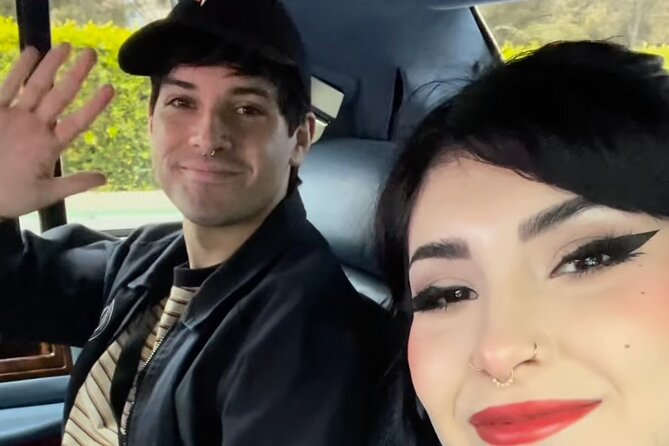
- The Formosa Cafe vault: Spend about 20 minutes at a former mob headquarters and see the original vault associated with Bugsy Siegel’s gambling operation.
- A funeral limousine ride: The vehicle adds atmosphere while carrying you between old Hollywood crime sites.
- Real addresses, not just movie trivia: Visit former residences, restaurants, offices, studios, and meeting places linked to Los Angeles mob figures.
- A compact small group: The maximum is eight people, useful for a story-heavy tour with visual material on your phone.
- A Hollywood connection: The route links organized crime with the film business, labor disputes, newspapers, nightspots, and classic cinema.
- A three-hour afternoon plan: The tour begins at 2:30 pm at 6801 Hollywood Boulevard and returns there.
Why the funeral limousine sets the tone
The vehicle is part of the appeal. You are not simply being led from one address to another on foot. You are driven through Hollywood in a classic funeral limousine, a setting that suits the subject without pretending this is a serious academic seminar.
That choice also matters practically. Los Angeles sites are spread out, and a vehicle lets the tour cover former homes, restaurants, studios, and landmarks in one afternoon. You can look out at the city while the guide connects one address to the next.
The format is intentionally theatrical. You will hear about murders, mob deals, surveillance, labor battles, and criminal alliances, but you will also see the glamorous side of old Hollywood. The contrast is the point. This is a tour about the people who moved between movie studios, casinos, newspapers, restaurants, and criminal networks.
The ride does not make the stories less serious. It simply gives the afternoon a memorable frame. If you prefer quiet museum rooms and footnotes, the tone may feel too showy. If you enjoy place-based storytelling with a little dark humor, it should suit you well.
More chauffeured rides to compare around Los Angeles:
- Manson Family Murders Funeral Limo Tour in LA
★ 5.0 · 74 reviews - Death Becomes Her Funeral Limo Tour of Los Angeles
★ 5.0 · 25 reviews - Hollywood Horror Story: The Black Dahlia Funeral Limo Tour
★ 5.0 · 18 reviews
Handsome Johnny Roselli’s Hollywood office
One early stop takes you to a historic Art Deco landmark that once held the corner office of Johnny Roselli, known as Handsome Johnny. Roselli was a mob fixer with links to Hollywood, Las Vegas, and organized crime, making this address useful for understanding how those worlds overlapped.
The value here is the physical setting. You are looking at a building where an underworld figure operated within the polished commercial world of Hollywood. The architecture and the story pull in opposite directions: the building suggests business and style, while the history points to influence, intimidation, and criminal power.
The tour does not ask you to treat Roselli as a movie character. His importance comes from the connections around him. He moved through circles where entertainment, gambling, politics, and organized crime could meet. Seeing the former office helps turn that broad idea into a particular place.
You should expect an exterior-focused stop rather than a long indoor visit, unless the guide says otherwise on the day. Bring your phone and pay attention to the visual material supplied for the tour, since it can help you picture the people and events connected to each site.
The Hollywood YMCA and the meeting of Siegel and Cohen
The Hollywood YMCA is one of the more surprising stops. It was the site of the first meeting between Bugsy Siegel and Mickey Cohen, held in the men’s locker room. That detail gives the building a strange double identity: a respectable community institution on the surface, and a meeting place tied to Los Angeles crime history underneath.
This is the sort of stop that makes the tour worthwhile. You are not only seeing a mansion or a famous restaurant. You are learning how an ordinary civic building became part of a major chapter in the city’s underworld.
The meeting itself is presented as tense and important because it helped shape relationships within the Los Angeles mob. The guide’s job is to make the personalities clear, since the names can otherwise blur together. Blaze is specifically identified as one of the hosts, and the experience depends heavily on her ability to tell these stories with humor and energy.
Access inside historic buildings can vary, so you should focus on the fact that the YMCA is part of the route and that the locker room is central to the story. The appeal is the unexpected location, not a long architectural visit.
The Hollywood Reporter’s original headquarters
The former headquarters of The Hollywood Reporter adds a different kind of power to the route. Billy Wilkerson, called the Hollywood Godfather, built his media business here and used the newspaper world to influence Hollywood’s elite.
This stop broadens the tour beyond gangsters with guns and nicknames. It shows how power in old Hollywood could come through information, publicity, reputation, and access. Wilkerson’s sharp writing and forceful influence placed him close to the people who controlled the film industry.
I like this part because it reminds you that organized crime history is also a story about institutions. Newspapers, studios, restaurants, and clubs all shaped who could enter Hollywood’s inner circles. The building connects the press to that network.
The former headquarters is also an Art Deco setting, so it fits the tour’s visual mood. You get another example of polished Hollywood design hiding stories of rivalry and control. The stop may appeal less if you want only classic gangsters, but it gives the tour more depth without turning it into a general movie-star sightseeing trip.
Same streets, a different set of wheels:
- Deluxe Los Angeles 5-Hour Limo Tour with Drinks Included
★ 5.0 · 13 reviews - A Star is Torn funeral limo tour of LA
★ 5.0 · 12 reviews - 5-Hour Tour , Los Angeles, Hollywood, Beverly Hills, and all over
★ 5.0 · 10 reviews - Private 4-Hour Limo Tour of LA by a TV Personality with Drinks
★ 5.0 · 8 reviews
Tops Café and the old dream of discovery
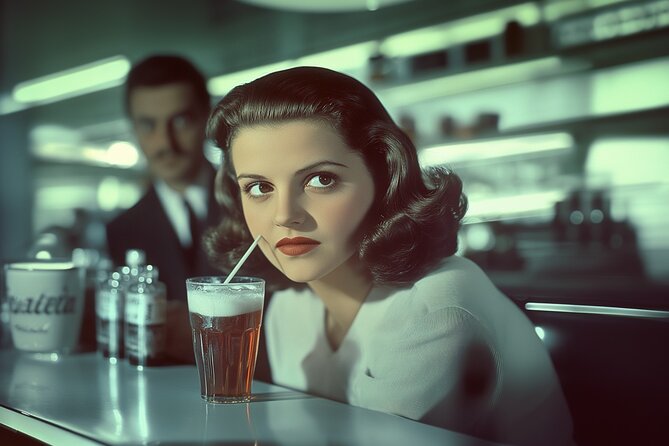
The former site of Tops Café brings the mood down from crime and power to Hollywood fantasy. This was the soda fountain where Lana Turner was famously discovered, a reminder of the city’s long-running promise that an unknown person might be noticed and become a star.
The location matters because it shows why Hollywood attracted so many people in the first place. The same city that offered glamour and opportunity also contained exploitation, pressure, and criminal influence. Tops Café represents the bright dream that existed beside the darker stories.
Do not expect a functioning soda fountain experience at the former site. Its importance is historical. You are visiting a place tied to the legend of discovery and hearing how ordinary hangouts could become part of Hollywood mythology.
For me, this is a helpful change of pace. A tour made entirely of murders and mob deals could become grim. Lana Turner’s connection gives the route a touch of old Hollywood magic, even as the larger tour asks you to question how much of that magic was real and how much was carefully polished afterward.
Crossroads of the World and Charlie Crawford
Crossroads of the World is a 1930s landmark built on the site where bootlegger Charlie Crawford met a violent end. The complex now represents glamorous old Hollywood architecture, but the story beneath it involves Prohibition-era crime.
This is another strong example of the tour’s central idea. Los Angeles did not separate elegance from vice as neatly as a visitor might expect. A stylish complex could occupy ground tied to a bootlegger, and a place associated with entertainment could carry memories of violence.
The stop is likely most rewarding for people who enjoy connecting buildings to earlier events. You will see a recognizable Hollywood landmark, then hear how its site fit into the city’s criminal past. It also helps place the mob stories in a wider period, since the route is not limited to one decade or one crime figure.
Because the tour covers several locations, the guide has to keep the timeline moving. If you want a detailed account of Prohibition in Los Angeles, you may need a separate book or museum visit. Here, the goal is a sharp story attached to a real address.
Twenty minutes at the Formosa Cafe
The Formosa Cafe is the clearest anchor of the afternoon. You spend about 20 minutes here, with time to go inside and purchase a cocktail or snacks. It once served as the Hollywood Syndicate’s headquarters, and its original vault is associated with Bugsy Siegel’s secret gambling operations.
This is the stop where the tour’s themes come together. You have the restaurant, the mob, the movie business, and the physical remains of a place used for hidden dealings. The vault gives you something concrete to look at instead of relying only on a guide’s description.
Food and drinks are not included, so budget for any refreshments you want. A 15-minute break is also built into the experience for restrooms and refreshments sold separately. The break is useful during a three-hour afternoon, especially since the tour includes several stops and a fair amount of listening.
The Formosa Cafe is not simply a photo stop. Give yourself time to take in the room and the idea of the place. You are seeing an actual former meeting point tied to the Hollywood Syndicate, not a set built to imitate one.
A studio lot shaped by labor conflict
The route also passes a historic studio lot where violent labor union battles took place under the influence of the Hollywood Syndicate’s organized crime network. This part of the tour shifts attention from individual mobsters to the systems that made their influence useful.
Hollywood crime was not only about restaurants, gambling, or personal rivalries. Labor disputes could affect the production of films and the operation of studios. The stop shows how organized crime could reach into working conditions and industrial power.
You will likely view the grounds from outside rather than take a full studio tour. That limitation is worth knowing. The stop is about the story connected to the property, not about visiting soundstages or learning how films are made today.
Still, it is an important piece of the route. It explains why the mob’s role in Hollywood mattered beyond celebrity gossip. Money, employment, unions, and studio control were all part of the same pressure-filled world.
Roselli’s home and Virginia Hill’s first Los Angeles address
The tour continues to places connected to two figures who helped define the glamorous side of organized crime. You see the former residence of Johnny Roselli, a man who moved between Hollywood, Las Vegas, and mob circles. The home was once under constant FBI surveillance, giving the address a built-in sense of tension.
You also visit Virginia Hill’s first Los Angeles residence. Hill was a mob courier and Bugsy Siegel’s companion, and this Beverly Hills address marked the beginning of her local story. The contrast between an elegant home and its criminal connections is exactly the kind of detail this tour handles well.
These stops are mainly about what happened at the addresses and who lived there. You should not expect a home interior visit. The point is to look at the setting, hear the connections, and picture how people under federal attention maintained a public appearance.
I find residential sites especially useful because they make the history personal. Offices and restaurants show where business took place. A home suggests the private lives, routines, and social standing of people who are often reduced to crime headlines.
The Godfather house and movie mythology
The final notable stop is the house used for the infamous horse head scene in The Godfather. This is the most direct link between the tour’s crime history and Hollywood filmmaking.
It is also where fact and fiction need to be kept separate. The house is a film location, not proof that the fictional event happened there. The interest comes from seeing how a real Los Angeles property became part of one of cinema’s best-known crime scenes.
For movie fans, this may be the most instantly recognizable stop. For visitors more interested in documented mob history, it works as a closing reminder that Hollywood has always borrowed from, reshaped, and dramatized the criminal world.
The house also rounds out the tour nicely. You begin with real people who influenced Hollywood and finish with a fictional scene that influenced how audiences imagine organized crime.
What $93.08 buys you
At $93.08 per person, this is not a low-cost sightseeing ride. The value depends on how much you want a focused story about Los Angeles crime and how much you value a small group and unusual access points.
You are paying for about three hours, a guide, transportation between scattered locations, the funeral limousine setting, and the Formosa Cafe visit. You also receive visual background material if you have a smartphone with data access. That material can help put faces, buildings, and events together as the afternoon unfolds.
The maximum group size of eight improves the price calculation. A large bus tour would make a story-heavy route feel less personal. Here, you have a better chance to hear the guide clearly and ask about the sites, though the supplied details do not promise a private tour.
The price makes the most sense for fans of Los Angeles history, classic Hollywood, organized crime, or true crime storytelling. If you are mainly seeking broad sightseeing, several cheaper options may cover Hollywood landmarks without this specialized focus. If you want the stories behind obscure addresses, the cost is easier to justify.
Timing, meeting point, and practical details
The tour starts at 2:30 pm at 6801 Hollywood Boulevard, Hollywood, California 90028. It ends back at the same meeting point, which simplifies your plans before dinner or an evening activity.
The experience lasts about three hours and includes a short break. The tour is offered in English, uses a mobile ticket, and is near public transportation. Service animals are allowed, and most people can participate.
You should arrive ready to spend much of the afternoon listening while moving between stops. Wear something comfortable and bring a charged phone with data access if you want to use the visual background material. Snacks are not included, but you can buy refreshments during the break and at the Formosa Cafe.
The subject matter is not softened for children or people who dislike true crime. Stories may involve murder, violence, criminal networks, and labor conflict. If those subjects upset you, choose a lighter Hollywood tour instead.
The experience requires good weather. You can cancel for a full refund up to 24 hours before the start time. Cancellations or changes within 24 hours are not refunded or accepted, and poor weather may lead to a new date or a full refund.
Who should book this afternoon?
I would choose this tour if you like specific places with complicated stories. It is a good fit for someone who wants more than the Walk of Fame, especially if Bugsy Siegel, Mickey Cohen, Johnny Roselli, Virginia Hill, or classic crime films already interest you.
It also suits visitors with limited time. In three hours, you cover a broad stretch of Hollywood history without arranging separate transport to each site. The small group and distinctive vehicle make the route feel more personal than a standard sightseeing loop.
I would hesitate if you want long indoor visits, detailed architectural commentary, or a polished film studio tour. Many stops are about seeing a site from the outside and hearing its story. The tone is lively and theatrical, and the crime content can be grim.
Book it if the Formosa Cafe vault, the real addresses, and the Hollywood mob connection sound more appealing than another standard star-home tour. Skip it if you want only glamorous movie history. The best reason to go is the collision of both worlds: the Hollywood dream on one side, and the people who used its money, fame, and access for darker purposes on the other.
FAQ
How long is the L.A. Mafia History Tour?
The experience lasts approximately three hours, including a 15-minute break for restrooms and refreshments.
Where does the tour begin and end?
It begins at 6801 Hollywood Boulevard in Hollywood, California, at 2:30 pm. The tour ends back at the same meeting point.
Is transportation included?
Yes. The tour includes transportation between the locations, with the experience taking place in a classic funeral limousine.
How many people can join the tour?
The maximum group size is eight people.
Is the Formosa Cafe visit included?
Yes. The tour includes about 20 minutes at the Formosa Cafe, and admission is free. Cocktails and snacks are available for purchase but are not included.
Is the tour suitable for people sensitive to crime stories?
The tour is not recommended for people who are easily upset by disturbing content or emotionally sensitive to true crime material. Stories include organized crime, violence, and labor conflict.
What is the cancellation policy?
You can cancel at least 24 hours before the start time for a full refund. Cancellations or changes made within 24 hours are not refunded or accepted. If poor weather cancels the tour, you can receive a full refund or select another date.
Just pulled up around Los Angeles
- 5-Hour Tour , Los Angeles, Hollywood, Beverly Hills, and all over★ 5.0 · 10 reviews
- 6-HourTour of Los Angeles, Hollywood, Beverly and other cities!!★ 5.0 · 6 reviews
- Private 4-Hour Limo Tour of LA by a TV Personality with Drinks★ 5.0 · 8 reviews
- Private 4-Hour Limo Tour of Los Angeles and Beaches★ 5.0 · 6 reviews
- Limo Tour: Hollywood, Beverly Hills, Santa Monica, Venice, Malibu★ 5.0 · 4 reviews
- Private 5-Hour Limo Tour of Los Angeles and Beach Cities★ 3.5 · 3 reviews
- O.J. Simpson & Menendez Brothers True Crime Driving Tour of L.A.★ 5.0 · 5 reviews
- 4, 5, or 6 Hour Los Angeles Private Tour in Stretch Limo★ 4.5 · 7 reviews
USA Limousine Trips, side by side
Arrival Transfer: Private Luxury 8 Passenger Limousine Service
Read our review →
Road to Hana Luxury Limo-Van Tour with Helicopter Flight
Read our review →

Private Arrival Transfer: From LAS Airport by SUV or Luxury Limo
Read our review →
1.5 Hour Stretch Limo Golf Cart Tour, Ultimate Old Town Exploration
Read our review →
Las Vegas Wedding at The Little Vegas Chapel including Limousine Transportation
Read our review →
Private Las Vegas Airport to Hotel Luxury Limousine Transfer
Read our review →
Lists this ride appears on